


Picture this: It's a typical workday at your office, and suddenly there's a power outage. Your team scrambles to save their work, and you're left dealing with potential data loss and productivity downtime.
But what if I told you there's a way to prevent this chaos and keep your operations running smoothly?
That's where APC UPS comes in.
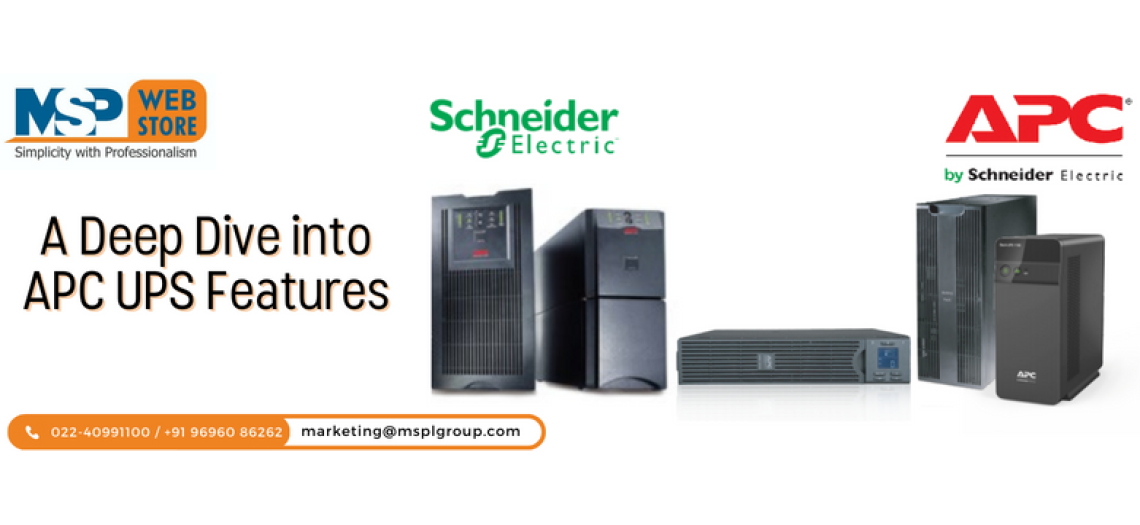
This innovative solution offers a deep dive into a range of features designed to safeguard your critical equipment and ensure uninterrupted power supply during outages. From advanced battery management to remote monitoring capabilities, APC UPS is truly a game-changer for businesses like yours.
Overview of APC (American Power Conversion):
In the field of uninterruptible power supply (UPS) systems, American Power Conversion (APC) stands out as a pioneer and leader. Established in 1981, APC has consistently delivered cutting-edge power solutions for both home and business applications. With a reputation for reliability and innovation, APC has become synonymous with power protection.
Importance of Uninterruptible Power Supply (UPS)
In a world where dependency on electronic devices is omnipresent, the importance of a reliable UPS system cannot be overstated. Unforeseen power outages, surges, and fluctuations can lead to data loss, hardware damage, and downtime, causing significant disruptions and financial losses. A UPS acts as a safeguard, providing a seamless power transition to keep critical systems operational during such events.
Basic Functionality of APC UPS
1- Power backup and surge protection
At its core, an APC UPS is designed to provide instantaneous power backup during electrical outages. This ensures uninterrupted operation of computers, servers, and other sensitive equipment. Additionally, APC UPS units incorporate surge protection mechanisms, shielding connected devices from voltage spikes that can occur during power restoration.
2- Automatic Voltage Regulation (AVR) capabilities
APC UPS systems go beyond simple power backup by offering Automatic Voltage Regulation (AVR) capabilities. AVR adjusts and stabilizes the incoming voltage, providing a consistent and optimal power supply to connected devices. This feature not only protects against overvoltage and undervoltage scenarios but also contributes to the longevity of electronic equipment.
3- Battery backup duration
The battery backup duration of an APC UPS varies depending on the model and the power consumption of connected devices. This duration is crucial during power outages, offering sufficient time for users to save their work, shut down systems gracefully, or even continue essential operations until normal power is restored.
Advanced Features of APC UPS:
1- Smart-UPS technology
APC Smart-UPS technology represents a significant leap forward in UPS innovation. These intelligent systems provide real-time monitoring, self-diagnosis, and automated corrective actions. Smart-UPS units not only enhance the reliability of power protection but also contribute to overall system efficiency.
2- Power conditioning and filtering
Beyond power backup, APC UPS units incorporate power conditioning and filtering features. These capabilities ensure a clean and stable power supply by eliminating electrical noise, harmonics, and other disturbances. This is particularly crucial for sensitive electronics, as it prevents potential damage caused by poor power quality.
3- Energy-saving modes
To address the growing concern of energy efficiency, APC UPS systems come equipped with energy-saving modes. These modes optimize power consumption during periods of low activity, reducing operational costs and environmental impact without compromising on the protection provided.
4- Remote management options
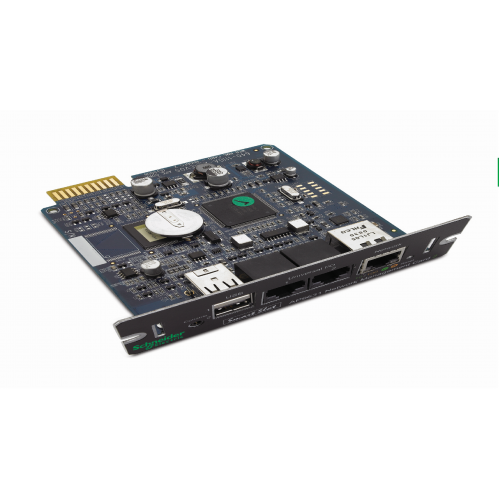
In an increasingly interconnected world, remote management is a key consideration. APC UPS units offer advanced remote monitoring and management options, allowing users to assess the system's status, configure settings, and receive notifications remotely. This feature is invaluable for IT administrators overseeing distributed systems.
Monitoring and Control in APC UPS:
1- Overview of monitoring software
APC provides sophisticated monitoring software that enables users to track the status of their UPS systems in real-time. These software solutions offer insights into power consumption, battery health, and overall system performance. This proactive approach empowers users to address potential issues before they escalate.
2- Remote access and notifications
Remote access capabilities extend beyond monitoring, allowing users to control and configure their APC UPS units from anywhere with an internet connection. Moreover, intelligent notification systems keep users informed about critical events, ensuring timely response to issues such as battery replacement warnings or power disturbances.
3- User-friendly interfaces
The user interfaces of APC UPS systems are designed with simplicity in mind. Intuitive displays and controls make it easy for users to navigate through settings, view important information, and perform necessary configurations. This user-friendly approach enhances the overall user experience and reduces the learning curve for system administrators.
Battery Management:
1- Types of batteries used in APC UPS
APC UPS units utilize different types of batteries, including sealed lead-acid (SLA) and lithium-ion. Each type has its advantages, with SLA batteries offering cost-effectiveness and reliability, while lithium-ion batteries provide longer life cycles and reduced maintenance requirements.
2- Battery health monitoring
Monitoring the health of UPS batteries is crucial for ensuring reliable performance. APC UPS systems employ advanced battery management systems that continuously assess the health and condition of batteries. This proactive approach allows users to schedule timely replacements, preventing unexpected failures during critical moments.
3- Replacement and maintenance considerations
When it comes to battery replacement, APC makes the process seamless. Hot-swappable batteries enable users to replace batteries without shutting down connected equipment. Additionally, maintenance needs are minimized through features like self-testing, which further contributes to the overall reliability and availability of the UPS system.
Scalability and Redundancy:
1- Parallel operation for increased capacity
APC UPS systems are designed with scalability in mind. Through parallel operation, multiple UPS units can work together to increase capacity and redundancy. This modular approach ensures that as power requirements grow, the UPS infrastructure can seamlessly expand to meet the demand without requiring a complete overhaul.
2- Redundancy options for critical applications
For mission-critical applications where downtime is not an option, APC UPS systems offer redundancy options. Redundant configurations provide a fail-safe mechanism, ensuring continuous operation even in the event of a UPS unit failure. This level of resilience is essential for industries where uninterrupted power is a non-negotiable requirement.
Integration with Other Systems:
1- Compatibility with different devices and systems
APC UPS systems are known for their compatibility with a wide range of devices and systems. Whether it's servers, networking equipment, or industrial machinery, APC ensures seamless integration to provide comprehensive power protection across diverse applications.
2- Integration with renewable energy sources
As the world shifts towards sustainable practices, APC UPS units can integrate with renewable energy sources. This not only aligns with environmental initiatives but also offers an added layer of resilience by diversifying the power sources available to the UPS system.
Tips for Choosing the Right APC UPS:
1- Assessing power needs
Before investing in an APC UPS, it's crucial to accurately assess power requirements. Understanding the power consumption of connected devices and factoring in potential expansion ensures that the chosen UPS unit can adequately meet current and future needs.
2- Considering future expansion
Scalability is a key consideration. Choosing an APC UPS system that can grow alongside the evolving power demands of the infrastructure helps future-proof the investment and minimizes the risk of outgrowing the system.
3- Budget considerations
While the benefits of APC UPS systems are evident, it's essential to align features with budget constraints. Conducting a thorough cost-benefit analysis and prioritizing critical features ensures a judicious investment in power protection.
So, if you're looking for the perfect UPS systems, you can't go wrong with APC by Schneider Electric as their UPS systems are designed to withstand the most demanding environments and provide reliable power when you need it most.
That's why they're the preferred choice of businesses and IT professionals around the world and we are the No.1 Partner of APC by Schneider electric from past 27 years.
0 Comments
Leave a Reply